viernes, 5 de noviembre de 2010

Welcome back to our Blog!!!


Hi everybody,

Welcome back to our Blog. Remember that this blog will help you to improve your English and Science knowledge. I will post different links in wich you will find new activities and amazing experiments. I will post some open questions in which I'll test how well you dominate the main concepts form each lesson. Hope you'll find it useful

martes, 11 de mayo de 2010

Test Review. Prehistory and Antiquity

PREHISTORY

1. The Palaeolithic period:
It started about one million years ago.
Human beings were hunters and gatherers.
They were nomads and lived in caves or huts.


2. The Neolithic period:
It started about seven thousand years ago.
Human beings lernt to cultivate plants and domesticated animals.
They became sedentary and built the first settlements.

3. The Age of Metals:
It started about six thousand years ago.
Human beings learnt to use metals.
They used cooper, bronze and iron.
Their settlements became villages. The chieftains ruled the villages.

4. Prehistoric heritage:
Prehistoric human beings made serveral contributions to civilisation:
Fire
Pottery
Cloth

PRE-ROMAN PERIOD

1. The Iberians and the Celts:
Three thousand years ago two important tribes inhabitated the Iberian Peninsula:

The Iberians.
They lived on the Mediterranean coast.
They were organised into tribes governed by a king.
There were warriors, farmers, craftsmen, merchants and slaves.
The Celts.
They lived in the northern and western parts of the peninsula.
They were organised into tribes.
Tribes were made up of clans. Clans were made up of families.

2.Tartessians and early colonisers.


The Tartessians.
They lived in the sothern part of the peninsula, in the Guadalquivir valley.
They were expert metalworkers, great travellers and salt producers.
The Phoenicians.
They came from Asia.
They formed colonies on the southern coast.
The Greeks.
They came to trade ceramics for metals.
They settled on the northeast coast.
The Carthaginians.
They were merchants from nothern Africa.
They came to trade metals and cloth.

ROMAN HISPANIA

1. Conquest of the Iberian Peninsula.
The Romans conquered the Iberian Peninsula in the year 218 B.C.
The Romans didn’t coquered the whole peninsula at the beginning, they fought those tribes for many years.
In the year 19 B.C. the Romans completed the conquest of the Iberian Peninsula.

2. Roman Rule.
The Romans named the peninsula Hispania, and made it a part of the Roman Empire.
The Romanisation happend when the inhabitants of the peninsula adopted the roman language and customs.
During the Romanisation the governor of Hispania was a Roman. He kept order and unity and collected taxes.

3. Society in Hispania.
Freemen:
They had rights, they could take part in the government, vote and own land.
Slaves: They had no rights and were the property of freemen. In Hispania those who fought against the Romans became slaves.


viernes, 19 de febrero de 2010

Let's prepare our Science Test


What is the he Universe?

The Universe is everything and contains everything.

Galaxies, Stars and nebulae.


  • Galaxies are enomous groups of star, gases and dust. There are three types of galaxies according to their shapes: elliptical, spiral and irregular. Our galaxy is called: the Milky Way.
  • Constellations are groups of stars.
  • Stars are enomous spheres in which nuclear fusion takes place. The emit light and heat.
  • Nebulae are gas clouds which reflect the light emitted by the stars around them.

The Solar System.


The Solar System is made up of the sun and the different celestial bodies that revolve around it.

    • The Sun is a yellow star which generates light and heat.
    • Planets are large celestial bodies which orbit the Sun. The interior planets are: Mercury, Venus, the Earth and Mars. The exterior planets are: Jupiter, Saturn, Uranus and Neptune.
    • Satellites are smaller celetsial boides that orbit a planet.
    • Asteroids are rocky celestial bodies, smaller than planets which revolve around the Sun.
    • Comets are small celestial bodies made of ice, dust and gases which revolve around the Sun.

The Earth and the Moon.

  • The rotation of the Earth: the Earth rotates on an axix which passes through both poles. It takes one day to spin around. The rotation of the Earth causes night and day.
  • The movement of the Earth around the Sun: the Earth revolves around the Sun. It takes one year for the Earth to complete its orbit around the Sun. The Seasons are the result of the Earth’s tilted axis and its orbit around the Sun.
  • The moon takes around 28 days to orbit the Earth.
  1. New moon occurs when the Moon is between the Sun and the Earth.
  2. First quarter occurs when half of one side receives sunlight.
  3. Full moon occurs when the Earth is between the Sun and the Moon.
  4. Last quarter occurs when the side of the Moon which faces the Sun is iluminated.

miércoles, 17 de febrero de 2010

Solar System Simulator


In the following link, you'll find an interactive web model of the Solar System. It is a simple astronomical simulator and predictor of planet orbits that displays dynamic view of the Solar System as seen from the north ecliptic pole.

www.faustweb.net/solaris

You can zoom in and out to view the entire Solar System, or just the inner planets. By pressing the STOP button a text entry box allows you to enter new values for the date. The model solar system is intended to give you a feel for the relationships of the orbits of the planets but the orbital size of the Moon is not properly scaled with respect to the Earth and the planets. If the orbital radius were to be properly scaled, the orbit would lie well inside the "Earth" as drawn here. The major axis of the Earth's elliptical orbit is horizontal oriented.

jueves, 11 de febrero de 2010

Science Project: The Universe


As I told you at school, it would be great if we could increase our knowledge of our Galaxy and the Solar System, making a project of one of its planets, stars or other celestial bodies, and presenting it to the rest of the class.

Remember that if you decide to make a model, you should complete it with a description of its characteristics.

In the following links, you will find extra information about the Universe, the Galaxies and the Solar System.

* European Space Agency web page:
http://www.esa.int/esaKIDSen/OurUniverse.html
* Astronomy for kids:
http://www.kidsastronomy.com/solar_system.htm

lunes, 25 de enero de 2010

Just a little help to prepare your Science Test

What are forces?
Forces are ations which make objects move or change shape.

How many different forces have we studied?
There are different types of forces:
• Gravity: Gravity makes objects fall to the ground. Gravity attracts objects.
• Electric force: It makes electrical circuits work. It can attract or repe.
• Magnetic force: magnets and certain metals have magnetic force. It can attract or repel.
• Friction: friction is a contact force. It can slow or stop moving an object.

How can forces affect a moving object?
Forces can affect a moving object in different ways:
• Making an object move.
• Stop a moving object.
• Changing the direction of a moving object.
• Increasing the speed of an object.
• Reducing the speed of an object.

What is a machine?
A machine is an object that uses the action of a force or transforms one type of energy into another.

How can we classify machines?
We can classify machines
• According to the number of pieces that make them up.
o Simple machines: they are made up by a simple machine.
o Complex machines: they are made up by more than one simple machines.
• According to how they work.
o Some machines need human energy to work.
o Some machines need wind or water to work.
o Some machines need fuel to work.
o Some machines need electricity to work.
• Acroding to what they do.
o Machines which produce movement: these machines transform energy into movement.
o Thermal machines: these machines transform energy into heat or cold.
o Information-processing machines: they process information. We use them to communicate and to make calculations.

Which parts make up a machine?
• The casing and structure.
o The casing is the outer part of a machine. It protects it from dust, moisture and damages.
o The structure is the frame that supports the weight of the machine.
• Operating parts and mechanisms.
o The operating parts are all the parts that make up the machine.
o A mechanism is a group of operating parts that work together fo perform a special function.
• Engines and motors: they are the parts of a machine that produce movement.
• Electrical circuits and electronics.

miércoles, 13 de enero de 2010

Forces and Their Effects

What’s a force?
A force is an action that changes the state of an object. A force can make an object move. Forces can change an object’s shape as well.


There are different types of forces:


• Gravity: Gravity makes objects fall to the ground. It attracts objects.
• Electric force: It makes electrical circuits work. It can attract or repel.
• Magnetic force: magnets and certain metals have magnetic force. It can attract or repel.
• Friction: Friction is a contact force. It can slow or stop moving objects.

How can forces affect a moving object?


Forces can affect a moving object in different ways:
• Making an object move: when you hit a ball, it starts moving.
• Stop a moving object: if you catch a moving ball, you stop it.
• Change the direction of a moving object: when you bounce a ball, you change its direction.
• Increase the speed: if you push a swing, it moves faster.
• Reduce speed: friction can reduce speed of moving objects.

jueves, 17 de diciembre de 2009

Merry Christmas!!!


Now that this first term is comming to an end, I'd like to wish you and your families a Merry Christmas and a Happy New Year!!!

lunes, 30 de noviembre de 2009

Electricity


What is electricity?

Electricity is the flow of electrical power or charge. Electricity is energy. In the same way you eat food to keep you going, machines and gadgets eat electricity to keep them going.

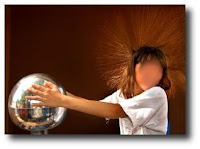
Static Electricity

Static electricity often happens when you rub things together. If you rub a balloon against your jumper 20 or 30 times, you'll find the balloon sticks to you. This happens because rubbing the balloon gives it an electric charge. The charge makes it stick to your jumper like a magnet, because your jumper gains an opposite electric charge. So your jumper and the balloon attract one another like the opposite ends of two magnets.
Serch in the Internet and try to answer the following questions before the friday 4th of november.
What did Thomas Edison invent?
What did Benjamin Franklin invent?

martes, 24 de noviembre de 2009

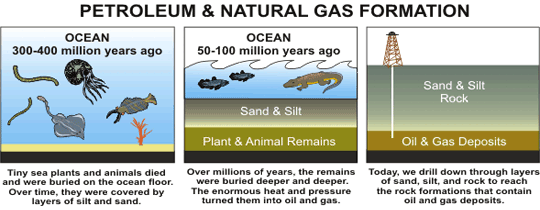
How was Natural Gas Formed?

Most of you posted a correct answer to this question. Anyway, here you've got the answer I was looking for.

How to make your own electric engine.

These are the materials you need:
One screw, one battery cell, a few inches of copper wire, and a magnet.


1. Set the screw on the magnet, bend the wire.


2. Press and hold the top end of the wire to the top end of the battery, making an electrical connection from the top battery end to the wire.
3. Lightly touch the free end of the wire to the side of the magnet. The magnet and screw start to spin immediately. We can get ours up to 10,000 RPM in about fifteen seconds.

lunes, 23 de noviembre de 2009

Normas para añadir comentarios en el Blog.


A la hora de añadir un comentario a alguna de las entradas del blog, debéis hacerlo desde una cuenta de correo que no esté asociada a ningún otro blog o página web. Aquellos comentarios que lleven asociados links a otros blogs o páginas web, serán bloqueados.

Asimismo recordad que es conveniente que siempre que accedáis a internet lo hagáis bajo la supervisión de un adulto, incluso a la hora de consultar nuestro blog de Science.

Just a little help to prepare your Science Test.


The Endocrine System.
The endocrine system manages and coordinates important functions like growth and reproduction. It is made up of glands which produce hormones.

Endocrine Glands.
• Thyroid gland: this gland produces hormones like thyroxid which lets our body absorb nutrients.
• Pancreas: this gland produces insulin which regulates the amount of sugar in blood.
• Ovaries and Testes: thes glands produce sex hormones.
• Pituitary gland: this gland coordinates other endocrine glands.

Energy:
Energy produces all the changes around us.

Sources of Energy:
They enable machines to do things. There are two types of sources of energy:
• Renewable sources of energy like wind or sunlight.
• Non-renewable sources of energy like oil, coal or natural gas.

Types of energy:
• Mechanical energy: energy of things in motion
• Chemical energy: energy produced by fossil fuels.
• Thermal energy: energy released as heat.
• Electrical energy: energy used by electrical devises.
• Nuclear energy: energy from uranium of plutonium.
• Light energy: energy from the light.

Transformation of energy:
• Electrical into mechanical: fan
• Electrical into light: bulb
• Electrica into thermal: heater.
• Nuclear into electrical: nuclear plant.

Light:
Light is a form of energy. It moves at 300000 Km per second. It moves in a straight way.

Objects block light in different ways:
• Opaque objects: the absorb or reflect light.
• Traslucent objects: they allow some light to pass through.
• Transparent objects: the allow light to pass through.

Reflection of light:
When light hits and opaque object, it is reflected and changes direction.

Let's review what energy is!

As you all may know, energy produces all the changes around us, so if a body has energy, it can produce changes.
There are different types of sources of energy: renewable sources of energy, and non-renewable sources of energy.

Renewable sources of energy:

  • The Sun.
  • Wind .
  • Water in motion.
  • The Earth.

Non-renewable sources of energy:

  • Fossil fuels like Natural Gas, Oil and Coal.
  • Nuclear Energy.

Search the web!

In the following link you'll learn more about energy: http://tonto.eia.doe.gov/kids/energy.cfm?page=about_home-basics

In the following link, you'll learn more about each of the different sources of energy: http://tonto.eia.doe.gov/kids/energy.cfm?page=2

Now that you know almost everything about energy and the sources of energy, try to answer this question: How was gas formed?

Welcome to our Blog!!!

Welcome to our blog!

This blog will help you to improve your English and Science knowledge. In the blog we will post different links in wich you will find new activities and amazing experiments. We will also post some open questions in which we will test how well you dominate the main concepts form each lesson.

Hope we all will learn a lot!